Henrik Lang · 5 October 2026
Analyzing Patterns of Wood Particle Distribution in Forest Ecosystem Recovery After Logging Activities
Forestry researchers track wood particle movement through soil layers and surface debris after commercial logging operations end, and they combine field sampling with remote sensing to build detailed distribution maps that show how sawdust and wood fragments settle across disturbed sites. Studies from multiple regions indicate that particle density decreases with distance from harvest boundaries while concentration remains higher in downslope drainage paths, and data collected over multi-year intervals reveal gradual incorporation into mineral soil horizons.
Sampling Techniques and Analytical Tools
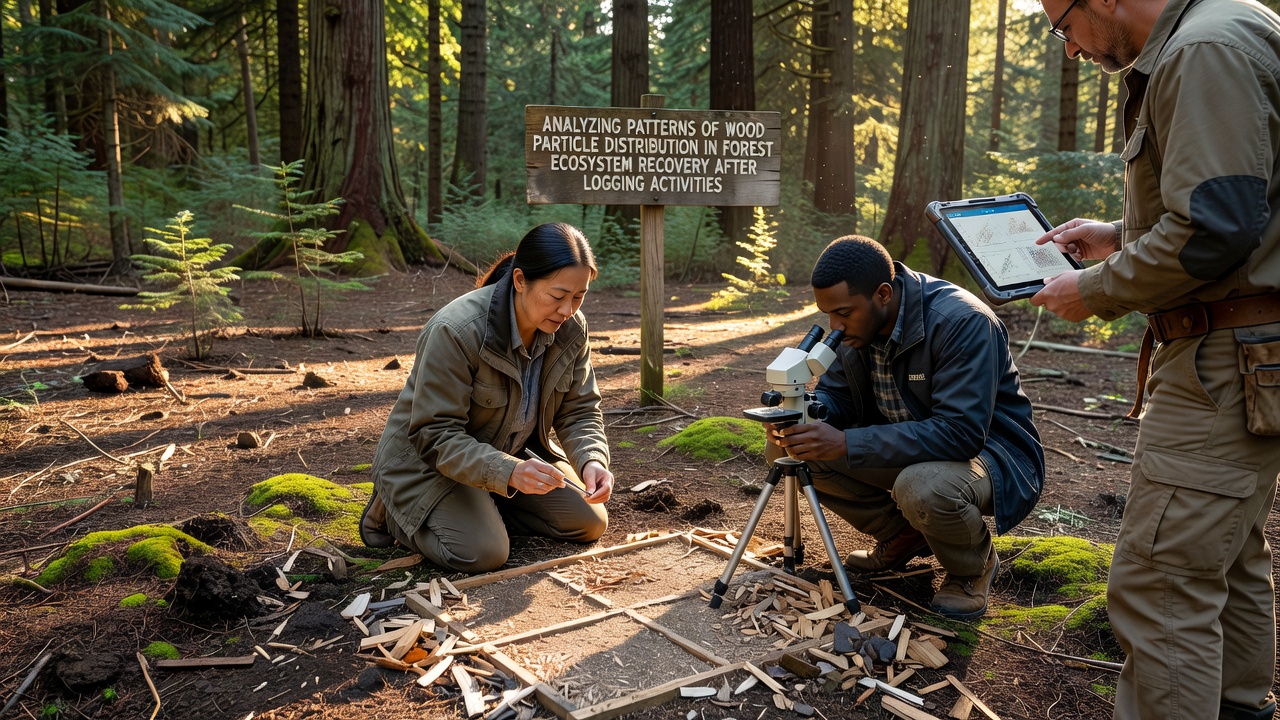
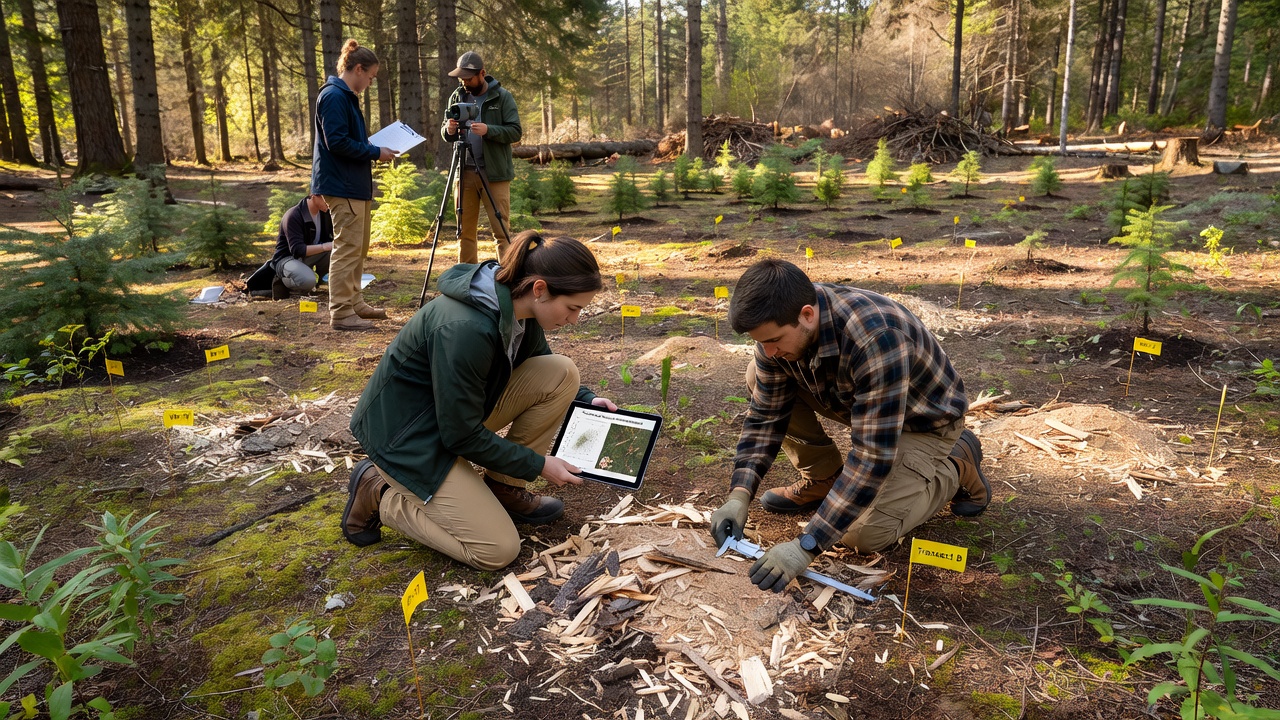
Teams set up grid-based transects that extend from skid trails into adjacent unlogged buffers, then they sieve soil cores at 5-centimeter intervals to separate particle size classes ranging from coarse chips above 2 millimeters down to fine dust below 63 micrometers. Laboratory protocols include loss-on-ignition tests that quantify organic carbon content within each fraction, and spatial analysts overlay these measurements onto LiDAR-derived topography models to identify accumulation zones near micro-topographic depressions. In October 2026 a multi-site monitoring network coordinated by Canadian and Australian agencies released updated datasets that refined earlier models of lateral transport driven by seasonal rainfall events.
Observed Spatial Patterns Across Recovery Sites
Particle plumes typically form elliptical footprints aligned with prevailing wind directions during dry seasons, whereas water-driven redistribution creates linear concentrations along ephemeral channels that activate after heavy precipitation. Observers note that finer fractions travel farther upslope via wind resuspension during the first two post-harvest years, while coarser fragments stay closer to stump locations and decompose more rapidly once buried by leaf litter. Research indicates that total wood-particle mass within the top 10 centimeters of soil drops by roughly 60 percent within five years at sites with moderate precipitation, yet residual carbon contributions persist in deeper horizons for over a decade.
Environmental Factors Shaping Movement
Soil texture and slope angle interact with particle morphology to control how far fragments migrate before they lodge against roots or aggregate into stable structures, and vegetation regrowth further alters pathways by intercepting windblown material and increasing surface roughness. Data from temperate conifer stands show that needle-fall from regenerating trees accelerates burial rates compared with deciduous sites, while freeze-thaw cycles in northern latitudes promote vertical mixing that redistributes particles into the rooting zone. Those who monitor these processes report that fungal hyphal networks bind fine wood dust into soil aggregates within three growing seasons, thereby reducing surface mobility and contributing to nutrient retention.
Links to Soil Biology and Regrowth Metrics
Microbial biomass measurements correlate positively with wood-particle carbon inputs during the initial recovery phase, and enzyme activity assays demonstrate elevated cellulase levels in zones where particle density exceeds 15 grams per kilogram of soil. Plant ecologists record faster seedling establishment on plots that retain moderate wood-particle cover because the material moderates soil temperature fluctuations and retains moisture during summer drought periods. A collaborative project between Natural Resources Canada and university researchers quantified these relationships across 12 harvested blocks, and the resulting models now inform harvest prescriptions that leave strategic residue patches to enhance recovery trajectories.
Regional Case Comparisons
Comparisons between Pacific Northwest Douglas-fir plantations and boreal spruce sites reveal distinct particle-size signatures tied to harvest machinery and slash management practices, and long-term plots established after the 2015–2020 harvest cycles continue to supply calibration data for predictive simulations. Australian eucalypt forests exhibit faster surface particle breakdown due to higher termite activity, whereas Canadian sites show greater lateral spread from snowmelt runoff events. European Forestry Institute monitoring programs have begun integrating similar particle-tracking protocols to standardize cross-continental assessments of post-logging carbon dynamics.
Conclusion
Continued refinement of sampling grids, particle-size fractionation methods, and spatial modeling approaches allows researchers to quantify how wood-particle distribution influences forest recovery timelines and soil carbon storage. Integration of October 2026 datasets with ongoing field networks provides updated baselines that support evidence-based adjustments to residue retention guidelines across different forest types and climate zones.